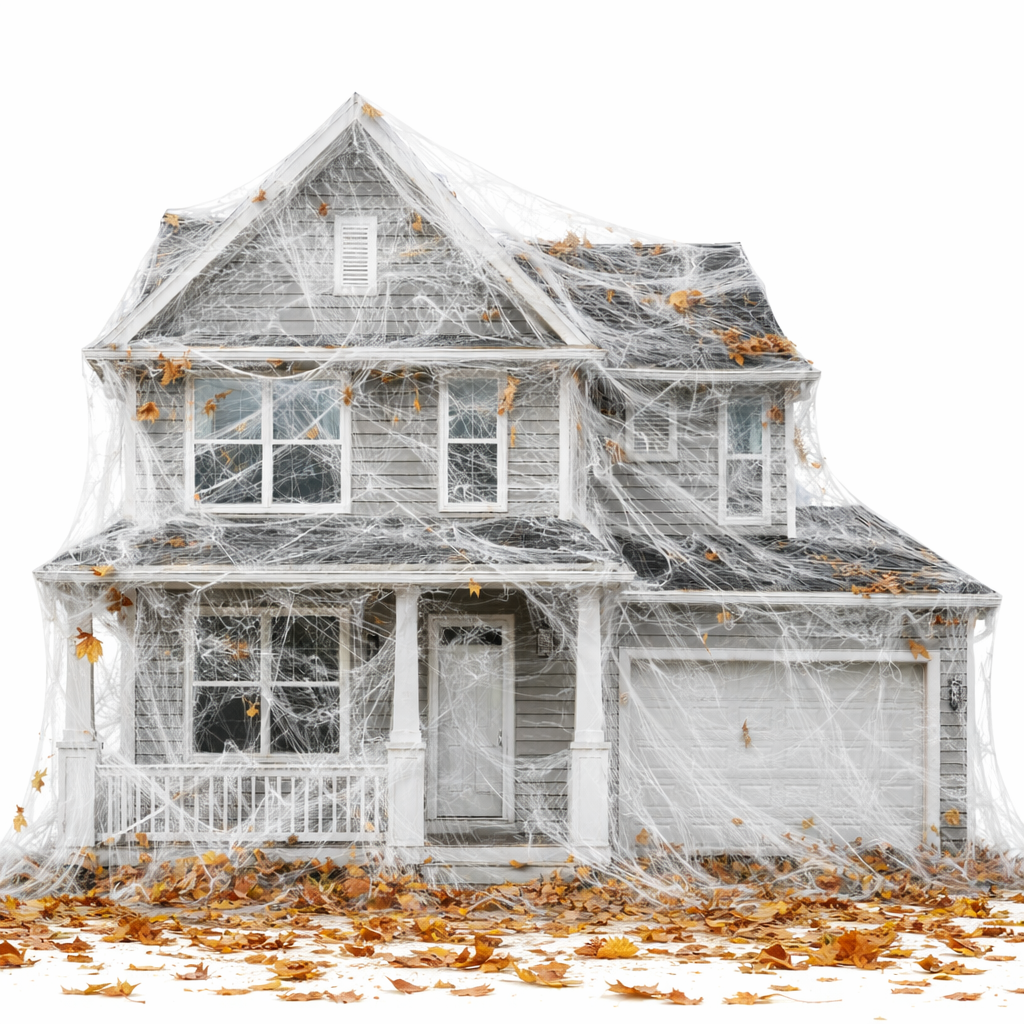
You know that moment. You walk into a room, catch something moving fast in your peripheral vision, and your whole body just — stops. Yeah. That feeling.
Here's the thing — spider pest control in Sydney isn't just a "creepy crawly" problem you can laugh off. This is Sydney. We've got Funnel-webs. Redbacks. Species that can genuinely hospitalize a child or a small pet. I've had clients call me after finding a Funnel-web inside a shoe their kid almost put on. That's not dramatic. That's just Tuesday in certain suburbs.
At Star Pest and Possum Control, they're not dealing with the same mild spider situation you'd find in, say, London or Seattle. The local knowledge here matters — a lot.
Most people think one or two spiders means nothing. Honestly? It's usually a sign of a much bigger population hiding somewhere you haven't looked yet. And warmer months make it worse. So much worse.
This guide covers what you actually need to know about spider pest control in Sydney — the dangerous species, when DIY becomes a liability, and when calling a spider exterminator stops being optional and starts being common sense.
Why Sydney Homes Are Basically a Spider Magnet
Sydney's climate isn't just "nice weather." For spiders, it's genuinely perfect — we're talking 20°C to 35°C for most of the year, which is exactly the sweet spot where they breed, hunt, and thrive. I lowkey didn't appreciate how bad this was until I started seeing the same infestation patterns repeat across dozens of Sydney suburbs.
But here's what most people miss. It's not just the heat.
It's everything else — the older Federation-style homes with a million little gaps, the leafy backyards butting up against bushland, the dense inner-city living where one neglected property affects the whole street. Sydney's built environment is basically a spider hotel, and nobody sent them a checkout notice.
The specific entry points? This part always gets overlooked:
- Cluttered garages and sheds — dark, undisturbed, perfect
- Woodpiles and garden mulch sitting right against the house
- Cracked wall joins, dodgy window seals, gaps around pipes
- Dim corners under beds, inside cupboards, behind bathroom vanities
- Other insects already inside — spiders don't move in without a food reason
That last one matters more than people think. If you've got a moth or cockroach problem, spiders aren't far behind. They follow the food supply. Always.
So yeah — it's not bad luck. It's just Sydney being Sydney.
The Spiders Actually Living in Sydney Homes (And Which Ones Should Worry You)
Look, not all spiders are created equal. Some are annoying. Some are genuinely dangerous. And one of them — yeah, we'll get to it — is legitimately one of the most venomous spiders on the planet.
1. Sydney Funnel-Web Spider
No sugarcoating this one. The Funnel-web is cooked. Highly toxic venom, aggressive when cornered, and the males actively wander into homes during summer and autumn looking for mates, which is arguably the most unhinged behavior of any Australian pest. They love cool, damp spots: basement corners, under rocks, deep in garden beds.
A bite is not a "maybe see a doctor tomorrow" situation. It's a medical emergency. Call 0272280231 immediately and apply a pressure immobilization bandage while you wait.
2. Redback Spider
Australia's most commonly encountered venomous spider — and honestly, the one I hear about most from people who've had a bad experience. Redbacks are shy, which makes them sneaky. They tuck into letterboxes, behind garden pots, under outdoor furniture, inside kids' play equipment… basically anywhere dry and sheltered that nobody checks regularly. That distinctive red or orange stripe on the abdomen is your ID. Bites are painful and can need antivenom, especially for kids and elderly people.
3. White-Tailed Spider
Here's what makes white-tails different — they don't spin webs. They hunt. At night. Which is exactly why they end up in shoes, folded laundry, and yes, beds. I've had clients absolutely horrified to find one under their pillow. Bites cause localized pain and swelling, and in rare cases, skin ulceration. Don't handle them. Ever.
4. Huntsman Spider
Real talk: Huntsmen look terrifying, but they're not medically dangerous. They eat insects, so technically they're doing you a favor. But — and this matters — seeing one inside usually signals a broader pest issue worth investigating. Their size alone makes them unwelcome to most people, and that's completely fair.
5. Common House Spider & Black House Spider
These are the cobweb culprits. Window corners, ceiling edges, behind furniture — that's their whole thing. Bites aren't dangerous, but a large population inside your home? That's not normal. That's an infestation signal you probably shouldn't ignore.
Signs You've Actually Got a Spider Problem (Not Just a Spider)
One spider doesn't mean an infestation. I want to be clear about that — because I've seen people panic over a single Huntsman and also seen people completely ignore a Redback colony under their deck for six months. Both extremes are a problem.
So here's what actually warrants a call to a professional spider exterminator:
- Multiple spiders showing up regularly — or worse, egg sacs
- Webs are coming back faster than you can vacuum them down
- Spiders turning up in bedrooms, bathrooms, and kitchens — the lived-in spaces
- A kid or pet has already had a close encounter or been bitten
- Your yard backs onto bushland, or you've got dense garden vegetation against the house
That last one. Seriously. Bushland-adjacent properties in Sydney are on a different level — I've written content for pest companies servicing those areas, and the infestation rates are genuinely not comparable to inner-city homes.
And look — if two or more of those boxes just got mentally ticked, don't sit on it. Spider and pest control isn't the kind of thing you schedule "eventually." Not in a city with Funnel-webs. Not with kids around.
It's not an afterthought. It really isn't.
DIY vs. Professional Spider Pest Control in Sydney — Let's Be Honest About Both
What You Can Actually Do Yourself
Some DIY stuff genuinely helps. Not all of it, but some.
Seal the obvious gaps — doors, windows, pipes coming through walls. Cut outdoor lighting where you can, because lights attract insects and insects attract spiders. It's a food chain thing that people forget. Declutter your garage and storage areas, vacuum down webs and egg sacs regularly — especially behind furniture and in corners — and make sure your fly screens and door sweeps aren't held together with wishful thinking.
That's the honest DIY list. It's worth doing.
But — and this is the part that makes me roll my eyes at every hardware store spider spray ad — those over-the-counter cans are mostly mid. Short-term knockdown, zero root cause treatment. Because here's what most people don't realize: a spider infestation is usually a symptom. Other insects are already inside your home, spiders moved in to eat them, and no amount of Mortain fixes that chain.
Why Professional Spider Pest Control Sydney Is Actually Worth the Money
Real talk: if you're already googling spider pest control Sydney near me, you're probably past the DIY stage. A proper spider exterminator doesn't just rock up, spray the skirting boards and leave. I've spoken to enough technicians to know the good ones do a full property inspection — internal and external — identify the exact species present (which matters more than people think), locate active nesting sites, and apply APVMA-approved treatments to the right areas.
What professional pest control Sydney spiders services actually cover:
- Full internal and external inspection
- Species ID — critical, because treatment differs by spider
- Targeted APVMA-approved insecticide application to harborage zones
- Physical web and egg sac removal
- Exclusion advice so they don't just come back next season
- Follow-up visits under a warranty plan
That last point. Warranty. A good company stands behind their work — and that alone separates the professionals from the guys with a spray bottle and a website.
Spider Pest Control Sydney Near Me — Here's What Star Pest and Possum Control Actually Delivers
Not every pest company operating in Sydney knows Sydney. And that gap in local knowledge — which suburbs border bushland, which older housing styles harbor the worst infestations, which species are spiking in which seasons — that stuff matters more than most people realize when they're just googling spider pest control Sydney near me and picking whoever's at the top.
Star Pest and Possum Control isn't a call center with contractors. They're a team of licensed technicians who actually know the local spider behavior, the seasonal patterns, and which treatments work for Sydney's specific environment. I've seen generic pest companies apply the same treatment protocol to a Mossman sandstone home and a Western Sydney brick veneer, and wonder why one job keeps failing. Local knowledge. It's nothing.
So what do you actually get when you book?
- Same-day callouts — and 24/7 emergency availability when it can't wait
- Upfront pricing from $99 — no "we'll tell you when we get there" nonsense
- APVMA-approved products that are safe for kids and pets once dry
- 6-month warranty on all spider treatments
- Uniformed, licensed technicians — not some guy with a spray bottle
- Full Sydney coverage — inner city, northern, western, southern suburbs, all of it
Real talk: the warranty alone is worth paying attention to. A company that offers 6 months of spider treatment is a company that's confident in its work. I've written for enough pest control brands to know that warranty terms are where you separate the serious operators from the ones who disappear after payment.
Star Pest and Possum Control — thousands of Sydney homeowners, fast turnaround, proper spider and pest control done right. Call them for a free quote before the problem gets worse.
When Should You Actually Call a Spider Exterminator?
Sooner than you think. That's the honest answer, and I'm sticking with it.
Most people wait for a moment — spider in the bedroom, kid nearly stepping on a Funnel-web in the garden, pet acting strange after sniffing around the back deck. And by that point? The infestation's already established. Well established. You're not catching it early anymore; you're doing damage control.
I've seen this pattern so many times it's almost normalized at this point — homeowners who knew something was off six months earlier but figured it'd sort itself out. It doesn't sort itself out, not in Sydney.
The smarter move is routine treatment every 6 to 12 months, especially if any of these apply:
- You're near bushland or backing onto green spaces
- Young kids or elderly family members are in the house
- You've dealt with spider issues in previous years — they come back to the same spots
- You're getting a property ready for sale or rent
Quick side note: the "preparing to sell" one gets overlooked constantly. Nobody wants a Redback situation discovered during a building inspection. Just book the treatment.
And look — proactive spider pest control is always going to cost less than an emergency callout after something's gone wrong. Always. Reactive treatment is stressful, rushed, and almost always more expensive than just staying ahead of it.
Yeah. Prevention wins. Every time.
What Actually Happens During a Professional Spider Treatment?
First time booking a spider treatment? Here's what the process actually looks like — no fluff.
Step 1 — Inspection
The technician goes through your entire property. Inside and out. Under decks, into roof voids, around every window frame, through the garage, across the garden. This part takes longer than people expect, and honestly, it should — rushing the inspection is where cheap operators cut corners and then wonder why the spiders are back in three weeks.
Step 2 — Identification
This matters more than most people realize. Species ID isn't just trivia — it directly determines which products get used and where. Treating a Redback harborage the same way you'd treat a Funnel-web zone is just… not how it works. A good technician knows the difference on sight.
Step 3 — Treatment
APVMA-approved residual insecticides go onto the surfaces spiders actually walk and nest on — not just a quick spray around the doorframe and done. Webs and egg sacs get physically removed. Internal areas — wardrobes, skirting boards, roof voids where needed — all get attention. This is the step that separates a real treatment from a mid one.
Step 4 — Prevention Advice
And this part gets skipped constantly by cheaper operators, which drives me a bit unhinged, honestly. A good technician walks you through specific changes — your property, your setup — that cut the chances of re-infestation. It takes maybe five minutes, and it's genuinely useful.
Step 5 — Warranty
Star Pest and Possum Control backs every spider treatment with a 6-month warranty. Spiders come back within that window? So do they. No extra cost. That's it.
People also asked
What is commercial pest control?
Commercial pest control is a professional pest management service designed specifically for businesses, offices, restaurants, warehouses, construction sites, and any non-residential property. Unlike standard home treatments, commercial pest control operates under stricter compliance requirements — food safety regulations, workplace health and safety standards, and in many cases, ongoing monitoring contracts rather than one-off visits. The treatments are scaled to larger spaces, higher foot traffic, and the specific pest pressures that come with commercial environments. Think restaurants dealing with cockroaches, warehouses with rodents, or construction sites — like those managed by companies in the building industry — attracting spiders and other pests due to disturbed ground and stored materials.
How much does commercial pest control cost?
Honestly, there's no single number — and anyone who quotes you a flat price without seeing the property first is guessing. Commercial pest control in Sydney typically ranges from $200 to $1,500+, depending on the size of the premises, the type of pest, the frequency of service, and the complexity of the treatment required. A small office with a minor ant problem sits at a very different price point than a large warehouse needing quarterly spider and rodent management. Most reputable companies — including Star Pest and Possum Control — will do a site inspection first and provide a transparent quote before any work begins. Always ask what's included, whether a warranty applies, and what happens if the problem returns.
What keeps spiders away permanently?
Real talk — nothing keeps spiders away permanently. Anyone selling you that idea is selling you something. But you can make your home genuinely unattractive to them long-term with the right combination of approaches. Seal every gap around doors, windows, and pipe entry points — spiders don't need much space. Cut outdoor lighting or switch to yellow-toned bulbs, because white light draws insects and insects draw spiders. Keep storage areas decluttered, clear garden mulch and woodpiles away from the house, and vacuum down webs and egg sacs the moment you spot them — disrupting the cycle matters. The most effective long-term solution is a professional residual spray treatment every 6 to 12 months combined with these habits. Professional treatments use APVMA-approved products that keep working on surfaces for months after application. That combination — professional treatment plus consistent prevention habits — is as close to permanent as it realistically gets in Sydney.
Homemade spider killer that works
A few DIY options do actually have some effect — just don't expect them to replace a proper treatment if you've got a real infestation.
- Peppermint oil spray — Mix 15 to 20 drops of pure peppermint essential oil with water in a spray bottle and apply around entry points, window sills, and corners. Spiders genuinely dislike it. Needs reapplying every few days to stay effective.
- White vinegar spray — Equal parts white vinegar and water. The acetic acid disrupts spiders on contact. Good for direct application but no lasting residual effect.
- Dish soap and water — A few drops of dish soap in a spray bottle with water breaks down the spider's exoskeleton on direct contact. Cheap, effective for individual spiders, zero ongoing protection.
- Diatomaceous earth — This one's underrated. Food-grade diatomaceous earth sprinkled along skirting boards, under furniture, and in dark corners physically damages spiders and insects that crawl through it. Lasts longer than liquid sprays and it's non-toxic to humans and pets.
Quick side note: these work fine for the occasional stray spider. But if you're seeing multiple spiders, egg sacs, or you're in a high-risk area near bushland — don't waste time with DIY. Call Star Pest and Possum Control and get it handled properly.